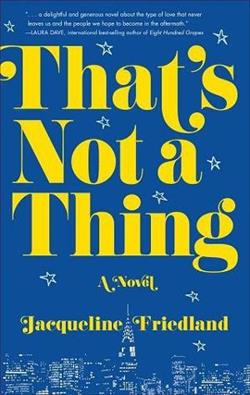
Jacqueline Friedland's novel, That's Not a Thing, offers an engaging exploration of love, loss, and self-discovery, set against the vibrant backdrop of New York City. At its core, the book is a poignant examination of how past relationships can shape our present and future, a theme that resonates deeply with anyone who has ever grappled with the complexities of the heart.
The story centers around Meredith Altman, a woman who is seemingly on the brink of a perfect life. Engaged to Aaron Rapp, a charming and successful doctor, Meredith's world is suddenly thrown into disarray when she encounters Wesley Latner, her former fiancé, at a restaurant. This unexpected reunion is further complicated by the revelation that Wesley is battling ALS, a progressive neurodegenerative disease. Friedland deftly uses this plot twist to delve into the intricacies of Meredith's emotions, as she is forced to confront unresolved feelings and the lingering impact of her past relationship with Wesley.
Character development is one of the novel's strongest suits. Meredith is portrayed with depth and authenticity, her internal struggles and growth depicted with a nuanced understanding of human emotion. As she navigates the complexities of her relationships with both Wesley and Aaron, readers are invited to reflect on their own experiences with love and loss. Wesley, despite his illness, is a charismatic and compelling character whose presence challenges Meredith to reevaluate her life choices. Aaron, on the other hand, is initially presented as the ideal partner, but as the story unfolds, his true nature is revealed, adding layers to the narrative and prompting Meredith to question what she truly wants in a partner.
Friedland's writing style is both eloquent and accessible, striking a balance between introspective prose and engaging dialogue. Her ability to capture the emotional nuances of her characters' experiences is reminiscent of authors like Jojo Moyes and Liane Moriarty, who similarly excel in crafting emotionally resonant narratives. The novel's pacing is well-executed, with moments of tension and introspection interspersed with lighter, more humorous scenes that provide relief and depth to the story.
One of the major themes in That's Not a Thing is the idea of second chances and the possibility of redemption. Meredith's journey is one of self-discovery, as she learns to reconcile her past with her present and make choices that align with her true self. The novel also explores the impact of illness on relationships, highlighting the ways in which adversity can bring people closer together or drive them apart. Friedland handles these themes with sensitivity and insight, creating a narrative that is both thought-provoking and emotionally impactful.
The emotional impact of the novel is profound, as Friedland skillfully captures the complexities of love and the pain of letting go. Readers will find themselves empathizing with Meredith's plight, rooting for her to find happiness and fulfillment. The depiction of Wesley's struggle with ALS is handled with care and respect, adding a layer of poignancy to the story that is both heart-wrenching and inspiring.
In comparison to other works in the contemporary romance and women's fiction genres, That's Not a Thing stands out for its authentic portrayal of flawed, relatable characters and its exploration of themes that resonate on a universal level. Friedland's ability to weave a compelling narrative that is both entertaining and emotionally resonant makes this novel a standout addition to the genre.
Overall, That's Not a Thing by Jacqueline Friedland is a beautifully crafted novel that will appeal to fans of contemporary romance and women's fiction. Its exploration of love, loss, and self-discovery is both engaging and thought-provoking, making it a must-read for anyone who appreciates a well-told story about the complexities of the human heart. Friedland's skillful storytelling and insightful character development ensure that this novel will linger in the minds of readers long after the final page is turned.