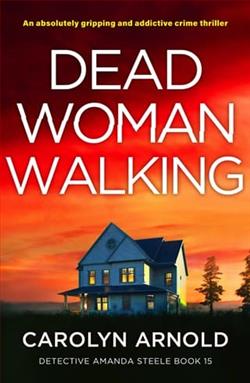
Carolyn Arnold’s Dead Woman Walking is a gripping addition to the crime thriller genre, weaving a tale of suspense, personal conflict, and the relentless pursuit of justice. The novel is a testament to Arnold’s ability to craft intricate plots that keep readers on the edge of their seats, while also delving deep into the emotional and psychological landscapes of her characters.
The story kicks off with a chilling premise: realtor Christine Lane is found dead in a luxurious, yet eerily empty house. The circumstances surrounding her death are mysterious and unsettling, setting the stage for a complex investigation led by Detective Amanda Steele. The stakes are immediately personal for Amanda, as Christine was involved with her half-brother, a relationship that thrusts him into the spotlight as a primary suspect. This familial connection adds a layer of tension and urgency to Amanda’s quest for the truth.
One of the novel’s standout features is its character development. Amanda Steele is portrayed as a dedicated and tenacious detective, driven by a strong moral compass and a desire to protect those she loves. Her internal struggles are palpable, particularly as she grapples with the implications of her brother’s involvement in the case. Arnold skillfully explores Amanda’s vulnerabilities, making her a relatable and compelling protagonist. The dynamic between Amanda and her partner, Trent, is also noteworthy. Their professional camaraderie and mutual respect add depth to the narrative, providing moments of levity amidst the tension.
Dominique Sharp, the successful lawyer whose house becomes the crime scene, is another intriguing character. Her initial portrayal as a high-powered attorney with a seemingly perfect life is gradually peeled back to reveal a more complex and flawed individual. The exploration of Dominique’s business dealings and personal relationships uncovers a web of deceit and betrayal, raising questions about trust and ambition. Arnold’s ability to create multifaceted characters ensures that readers remain invested in their fates.
The novel’s themes are both timeless and timely. At its core, Dead Woman Walking examines the lengths to which individuals will go to protect their secrets and the consequences of those actions. The theme of revenge is intricately woven into the narrative, driving the plot forward and adding layers of intrigue. Additionally, the book touches on the idea of justice and the sacrifices required to achieve it. Amanda’s journey is not just about solving a murder; it’s about confronting her own beliefs and making difficult choices to uphold the law.
Arnold’s writing style is both engaging and evocative. Her descriptions of the crime scenes are vivid, immersing readers in the chilling atmosphere of the investigation. The pacing is expertly managed, with each chapter building on the tension and propelling the story towards its dramatic conclusion. The dialogue is sharp and realistic, capturing the nuances of each character’s personality and motivations.
In comparison to other works in the genre, Dead Woman Walking stands out for its intricate plot and emotional depth. Fans of authors like Lisa Gardner and Karin Slaughter will appreciate Arnold’s ability to blend suspense with character-driven storytelling. The novel’s focus on family dynamics and personal stakes adds a layer of complexity that elevates it above a standard procedural thriller.
Overall, Dead Woman Walking is a compelling read that will satisfy both mystery enthusiasts and those seeking a deeper exploration of human nature. Carolyn Arnold has crafted a story that is as thought-provoking as it is thrilling, leaving readers eager for more from Detective Amanda Steele. The novel’s blend of suspense, emotion, and moral complexity ensures that it will resonate with audiences long after the final page is turned.
For those seeking a crime thriller that offers more than just a puzzle to solve, Dead Woman Walking delivers a powerful narrative that challenges perceptions and keeps readers guessing until the very end. It is a testament to Arnold’s skill as a storyteller and her ability to create characters that linger in the mind, making it a must-read for fans of the genre.